
Marketing teams in Malaysia are entering a more privacy-aware period. The goal is not to stop collecting useful lead and campaign data. The goal is to make sure the website, forms, tracking tags, CRM handoff, and remarketing audiences are clean enough to support growth without creating avoidable data risk.
The practical trigger is regulatory change. Malaysia’s official Personal Data Protection Department published the Personal Data Protection (Amendment) Act 2024, and SMEs should treat that as a reason to review how marketing data is collected and used. At the same time, ad platforms increasingly depend on consent-aware signals, first-party data, and higher-quality conversion events. That combination makes privacy readiness a performance issue, not only a compliance issue.

Why Privacy Readiness Now Affects Marketing Performance
Many businesses still treat privacy as a legal page hidden in the website footer. That is too narrow. Privacy readiness affects the data that reaches Google Ads, Meta Ads, analytics dashboards, lead reports, email lists, and remarketing audiences. When consent choices, tag behavior, and conversion definitions are inconsistent, the business may see weaker reporting and less reliable campaign optimization.
Google’s documentation explains that Tag Manager supports consent settings that can change how tags behave based on a user’s consent state. This matters because modern campaign measurement depends on whether analytics, remarketing, and conversion tags fire correctly and lawfully. A simple website form can become a data-quality problem if it sends duplicate events, stores unnecessary fields, or passes personal data into tools that do not need it.
For Malaysian SMEs, the best approach is to build a simple, repeatable marketing data map. List where personal data is collected, what notice the user sees, which tags fire, where the lead goes, who can access it, and how the business uses that lead for follow-up or remarketing. This does not need to be complicated. It needs to be specific.
The SME Audit: What To Check Before Scaling Ads
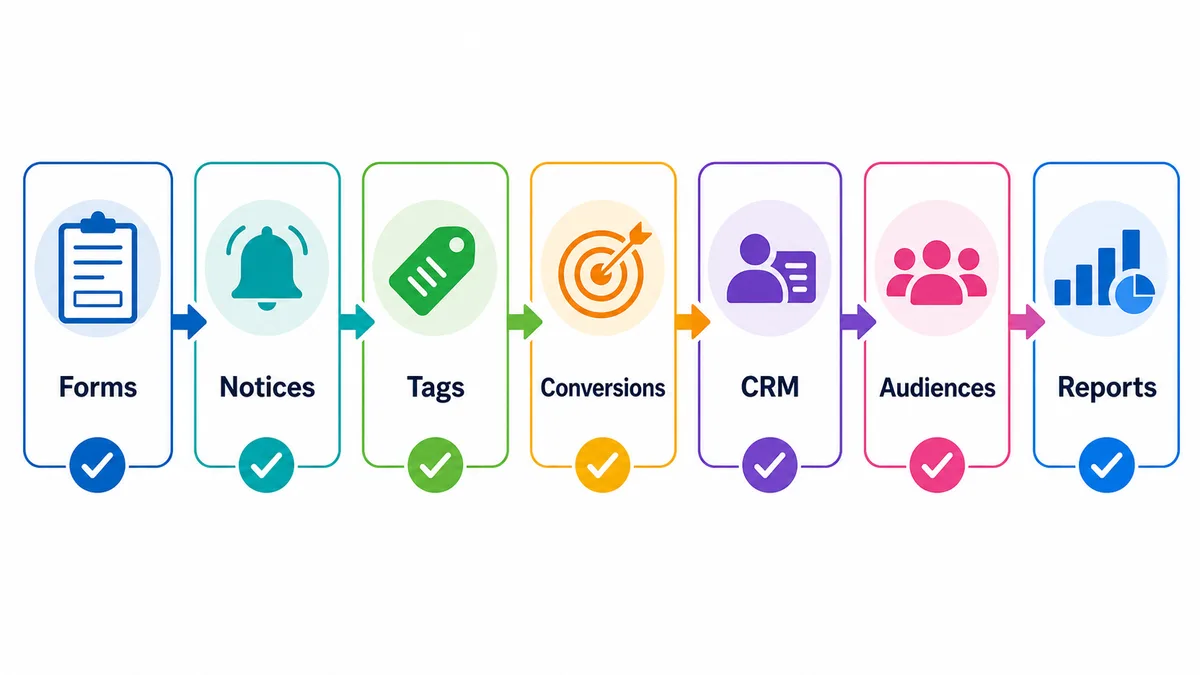
Before increasing paid media spend, SMEs should audit the data points that sit between a visitor and a sale. The most common issues are usually operational, not technical: old forms, vague consent wording, multiple tag containers, duplicated conversion events, unclear campaign UTMs, and spreadsheets that hold leads longer than needed.
- Lead forms: Confirm each form collects only the fields required to respond to the enquiry, and make the next step clear before the user submits.
- Consent and notices: Check whether users can understand what data is collected, why it is collected, and how the business will use it.
- Tag containers: Review Google Tag Manager, analytics tags, Meta Pixel, TikTok Pixel, call tracking, chat widgets, heatmaps, and any third-party scripts that collect visitor data.
- Conversion events: Keep primary conversions tied to real business actions such as qualified form enquiries, phone calls, WhatsApp enquiries, bookings, purchases, or checkout steps.
- CRM and spreadsheets: Limit access to lead data, remove outdated exports, and decide how long each type of lead record should be retained.
- Remarketing audiences: Make sure audiences are based on appropriate user actions, current campaign needs, and platform policies.
- Reporting: Separate traffic quality, lead quality, sales value, and repeat enquiries so campaign decisions are not based only on clicks.
How Consent-Aware Tracking Changes Google Ads And Meta Ads
When tracking is inconsistent, campaigns can learn from weak signals. That creates a performance gap. A campaign may report many conversions, but the sales team may see poor lead quality. A remarketing audience may be too broad. A landing page may fire the same event twice. Consent-aware tracking helps the business define which events matter, when tags should fire, and how reporting should be interpreted.
This is especially important for SMEs using a mix of paid search, paid social, organic content, and website enquiry forms. Atas Media Marketing’s online advertising service covers Google Ads, Meta Ads, and campaign support, while its social media marketing service supports channels where retargeting, creative testing, and audience building often happen. The stronger the tracking foundation, the easier it is to compare which channel creates real business value.
A useful rule: do not let every click become a conversion. Primary conversions should be actions the business is willing to optimize budget toward. Secondary events can still be measured, but they should not carry the same weight as a qualified enquiry or sale.
Website Design Is Part Of Privacy-Ready Marketing
Privacy readiness is not only a tag setup task. It also depends on how the website is built. A strong landing page tells visitors what they are getting, why the business needs their details, and what will happen after submission. A weak page hides important information, asks for too much, or sends visitors through unclear forms and chat flows.
Atas lists website design services for responsive, SEO-friendly websites in Malaysia. That matters because the website is usually the place where paid traffic, organic search, social content, and direct enquiries meet. If the site structure is poor, even well-managed ads will struggle to produce clean, consent-aware data.
A practical website review should include privacy notices, form copy, thank-you pages, conversion tags, page speed, mobile layout, navigation, and CRM routing. These pieces should work together before the business spends more aggressively on traffic.
A 30-Day PDPA-Ready Marketing Action Plan
A full data governance project can be large, but marketing teams can make meaningful progress in 30 days. The point is to reduce obvious risk, improve data quality, and create a better foundation for campaigns.
Week 1: Map The Data
List every enquiry path on the website: contact forms, quotation forms, newsletter signups, checkout flows, WhatsApp buttons, call tracking numbers, chat widgets, and downloadable lead magnets. For each one, record what data is collected and where it goes.
Week 2: Clean The Tags
Review Google Tag Manager, analytics, advertising pixels, and third-party scripts. Remove outdated tags, document active tags, and confirm which events are primary conversions.
Week 3: Improve Forms And Landing Pages
Update form labels, consent wording, thank-you pages, and calls to action. Keep the user journey direct, especially on mobile.
Week 4: Align Reporting
Match ad platform conversions with actual lead outcomes. Separate raw leads from qualified leads, and build simple reporting that helps the business decide where budget should go next.
FAQs
Does PDPA-ready marketing mean we cannot run remarketing?
No. It means remarketing should be planned carefully. The business should understand what audience data is being created, why it is being used, and whether users have received clear information about that use.
Should every website use a cookie consent banner?
The right implementation depends on the website, scripts, and legal advice. From a marketing operations view, every SME should at least know which scripts collect user data and how consent choices affect those scripts.
What is the biggest tracking mistake SMEs make?
The biggest mistake is optimizing campaigns toward soft or duplicate conversions. Clicks, page views, and button taps can be useful secondary signals, but budget decisions should rely on actions that map to real business outcomes.
Can privacy-ready tracking improve ad performance?
Yes, when it improves data quality. Cleaner tags, clearer conversion definitions, and better lead routing help ad platforms and marketing teams understand which campaigns generate valuable enquiries.
Is this only relevant for ecommerce?
No. Service businesses, B2B companies, clinics, education providers, local retailers, and professional firms also collect personal data through forms, calls, chats, bookings, and follow-up workflows.
Who should own the audit?
Marketing, sales, web, and management should share ownership. The marketer understands campaigns, the sales team understands lead quality, the web team understands tags and forms, and management decides risk tolerance.
Make Your Marketing Data Cleaner Before You Scale
PDPA-ready marketing is not a one-time checkbox. It is a cleaner way to run websites, ads, content, and reporting. For Malaysian SMEs, the benefit is practical: better user trust, cleaner conversion data, stronger campaign decisions, and fewer preventable data problems.
If your business wants a website, tracking, and advertising setup that is easier to measure and manage, contact Atas Media Marketing to review your current digital marketing workflow and plan the next improvement.