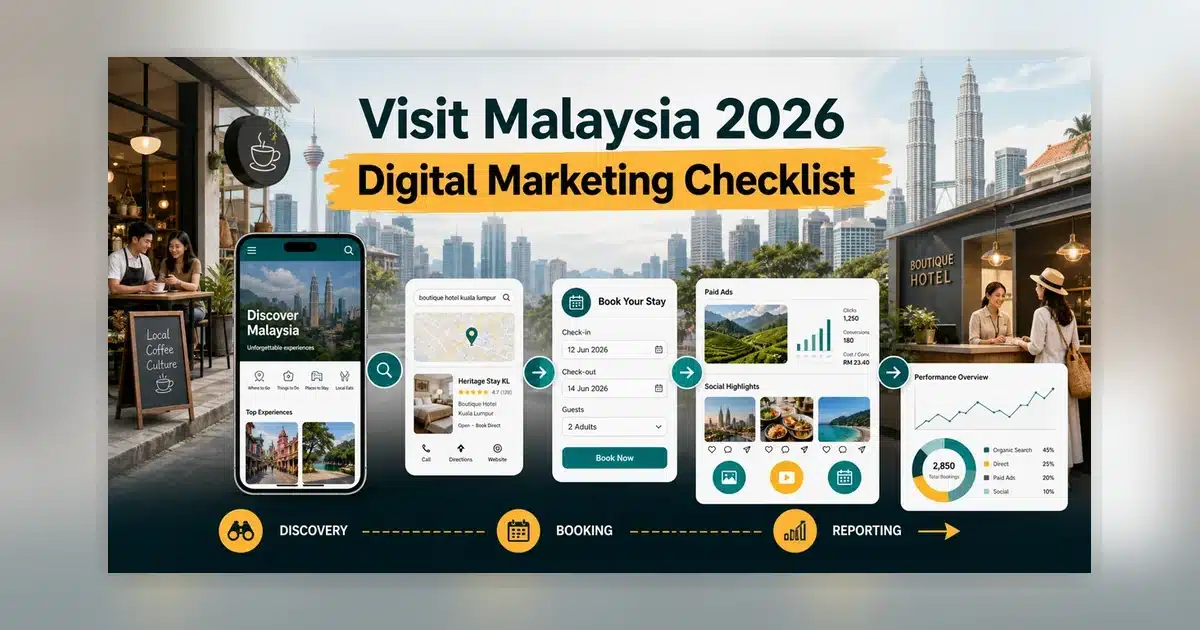
Visit Malaysia 2026 is not only a national tourism campaign. For Malaysian SMEs in hospitality, F&B, retail, wellness, transport, attractions, events, education, and local services, it is also a demand-planning moment. More visitor interest can turn into real revenue only when the business is easy to discover, easy to trust, easy to book, and easy to measure.
Tourism Malaysia marked the official start of the campaign on 1 January 2026 and said VM2026 aims to attract 43 million international visitors in 2026. The same announcement reported 38.3 million international visitor arrivals from January to November 2025, showing that tourism demand already had strong momentum before the campaign year.
Why Tourism SMEs Should Prepare Now
Visitor demand does not automatically reward every local business equally. The businesses that benefit most are usually the ones that appear in search, answer practical questions quickly, show clear pricing or packages, offer simple booking steps, and collect enough data to see which channels actually bring customers.
Domestic demand matters too. DOSM’s Domestic Tourism Survey 2025 reported RM121.3 billion in domestic visitor expenditure, with shopping at 36.9% and food and beverages at 16.1% of spending. That makes the opportunity broader than hotels and attractions; it includes malls, cafés, clinics, boutiques, local experiences, and service businesses that tourists and domestic travellers discover on mobile.
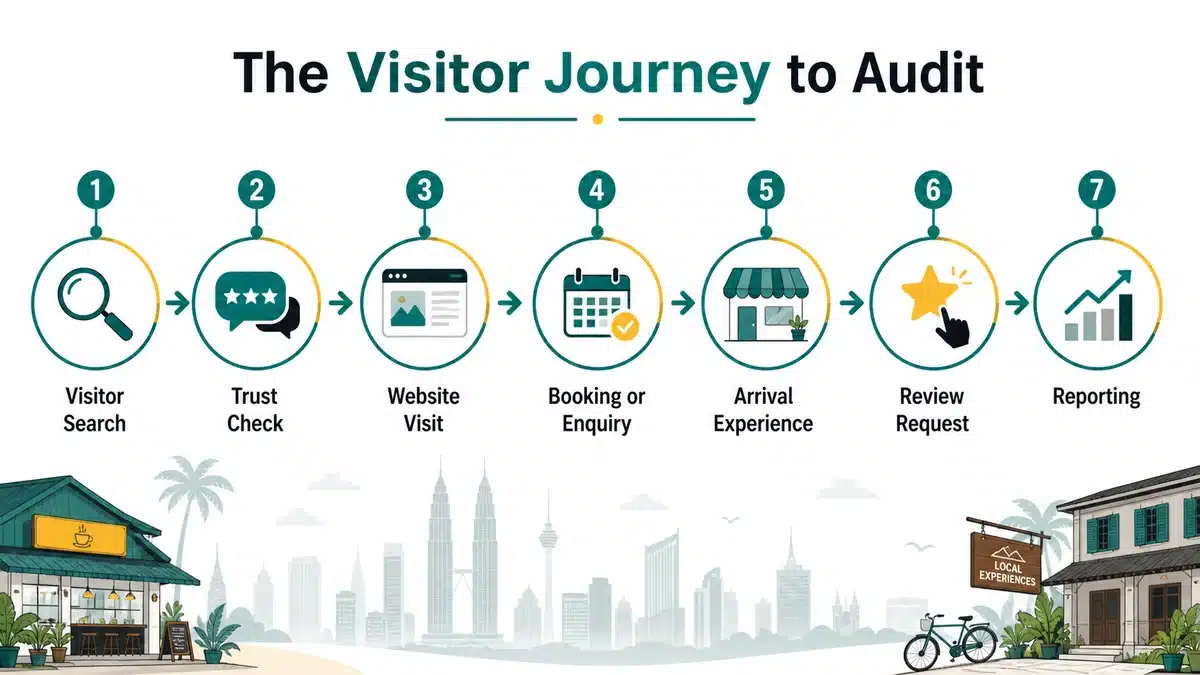
The Visitor Journey to Audit
A useful Visit Malaysia 2026 checklist starts with the customer journey, not the ad budget. Map the steps a visitor takes from discovery to purchase, then remove friction at each point.
- Discovery: The visitor searches for places, food, activities, nearby services, transport, prices, opening hours, or booking options.
- Trust check: They compare photos, reviews, location, payment options, languages, parking, accessibility, and cancellation rules.
- Website visit: They need a fast page with clear packages, FAQs, contact options, map links, and mobile-friendly layout.
- Enquiry or booking: They should be able to reserve, message, call, buy, request a quote, or get directions without confusion.
- Arrival and experience: The business should deliver what was promised online, then encourage reviews, repeat visits, and referrals.
- Reporting: The team should know which search terms, ads, social posts, pages, and promotions created real enquiries or sales.
The 2026 Digital Marketing Checklist
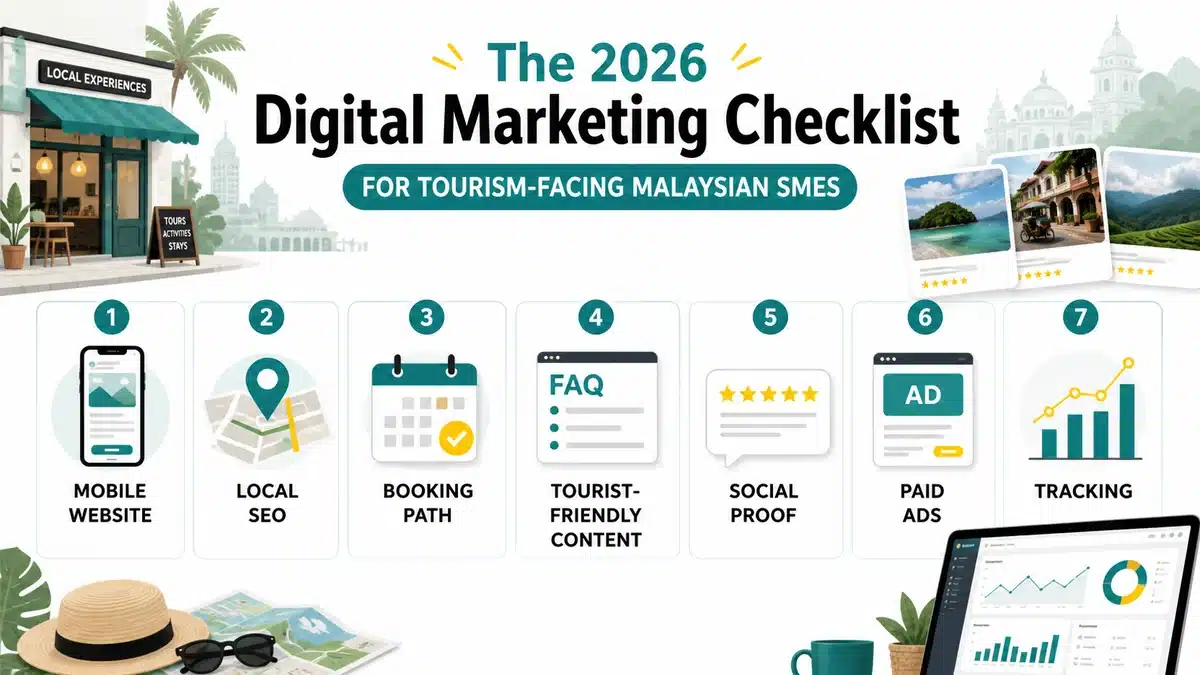
Before running bigger campaigns, tourism-facing SMEs should make sure the basics are ready. A high-performing tourism funnel is usually built from several practical pieces working together.
- Mobile website: Make key pages fast, readable, and easy to navigate on a phone.
- Local SEO: Keep business name, address, map pin, opening hours, service area, and categories consistent across public listings.
- Booking path: Reduce the number of steps needed to call, chat, reserve, pay, or request a quote.
- Tourist-friendly content: Add FAQs for price, location, nearby landmarks, languages, family suitability, halal options, accessibility, and best visiting times where relevant.
- Social proof: Show recent photos, reviews, testimonials, user-generated content, awards, and clear before/after or experience visuals.
- Paid ads: Build campaigns around specific visitor intent such as weekend packages, near-me searches, family activities, dining occasions, or seasonal events.
- Tracking: Use campaign tags, conversion events, enquiry source fields, and simple dashboards to connect marketing activity with sales outcomes.
Website Content That Visitors Actually Need
Many tourism-facing websites look attractive but miss practical details. Visitors often need to know whether a place is open today, how far it is from a landmark, whether booking is required, whether prices are updated, what payment methods are accepted, how to get there, and what happens if they arrive late or need to reschedule.
For businesses near tourist routes, event venues, transport hubs, campuses, malls, and hotels, these details can directly affect conversion. The page should answer the visitor’s next question before they leave for a competitor with clearer information.
How Paid Ads Should Change During VM2026
Paid media should be more specific than broad brand awareness. A café might promote breakfast near a tourist landmark. A clinic might promote traveller-friendly appointment slots. A retailer might promote giftable products. A hotel supplier, transport service, or attraction might promote packages tied to school holidays, festivals, conferences, or long weekends.
Atas Media’s online advertising service covers targeted campaigns, real-time analytics, reporting, and conversion-focused strategy. That matters for tourism-facing SMEs because VM2026 campaigns should be judged by bookings, qualified enquiries, store visits, sales value, and repeat potential, not only impressions or clicks.
How Social Content Can Support Visitor Confidence
Social content should show the real experience clearly. That can include short-form videos, customer moments, staff explanations, seasonal menus, arrival guides, product demonstrations, room walkthroughs, event previews, neighbourhood guides, and answers to common visitor questions.
Atas Media’s social media marketing service supports Facebook advertising, Instagram advertising, Facebook Pixel and Business Manager setup, digital content strategy, and creative content ideas. Those pieces help SMEs turn visitor attention into clearer discovery, trust, and follow-up.
How Atas Media Can Support the Full Funnel
Atas Media Marketing describes itself as a full-service digital agency delivering website design, online advertising, social media, and content creation. That mix is relevant for VM2026 because the opportunity touches the full funnel: search visibility, landing pages, social proof, paid campaigns, content production, lead capture, and reporting.
For tourism-facing SMEs, Atas can help align the website, ad message, content plan, tracking setup, and conversion path so more visitor interest becomes measurable business growth.
What to Measure During the Campaign Year
A useful dashboard should separate visibility from outcomes. Track local search views, website sessions, enquiry source, booking clicks, calls, chat starts, quote requests, store visit indicators, campaign cost, revenue estimates, review volume, and repeat purchase behaviour where possible.
The point is not to build a complicated reporting system. The point is to learn which offers, content angles, visitor segments, and channels create business value, then shift budget toward what works.
FAQs
What is Visit Malaysia 2026?
Visit Malaysia 2026 is Malaysia’s national tourism campaign for 2026, designed to attract international visitors and support tourism-related economic activity across the country.
Which SMEs can benefit from Visit Malaysia 2026?
Hotels, cafés, restaurants, retailers, clinics, salons, attractions, transport providers, event venues, education providers, and local service businesses can benefit when visitors can discover and buy from them easily.
Do tourism-facing SMEs need a new website?
Not always. Some SMEs need a full redesign, but many can start by improving mobile speed, landing pages, booking steps, local SEO, FAQs, photos, tracking, and enquiry forms.
What should SMEs advertise during Visit Malaysia 2026?
Advertise specific offers tied to visitor intent, such as packages, nearby attractions, seasonal menus, weekend deals, appointment slots, experiences, directions, or event-related promotions.
How should businesses measure tourism marketing?
Measure enquiries, bookings, calls, chats, store visits, revenue estimates, cost per qualified lead, review growth, and repeat purchase behaviour, not only reach or impressions.
Can social media help tourism-facing SMEs?
Yes. Social media can show real experiences, answer visitor questions, build trust, promote timely offers, and send traffic to booking pages or chat channels.
Turn Visitor Attention Into Measurable Demand
Visit Malaysia 2026 creates a useful planning window for SMEs that depend on visitor movement, local discovery, and mobile-first decisions. The practical work is clear: make the business easier to find, easier to trust, easier to book, and easier to measure.
If your business wants to prepare its website, ads, social content, and tracking for Visit Malaysia 2026, contact Atas Media Marketing to review your current funnel and plan the next practical improvement.